Education
technology as extension, agency, and imitation.
08.28.2024
/
5 min.
The foundation of technology’s relation to the human body is extension.
This idea posits that technology can extend or amplify human capabilities by replicating, supplementing, or enhancing mental or physical faculties.
The wheel, for instance, extended the reach of human feet, allowing for unprecedented travel and trade.
Even the microscope, a seemingly simple tool, extended the power of human sight, opening up entire new worlds for exploration and understanding.
In this current moment, extension has morphed into imitation, in which technology strives to not only augment but also replicate human capabilities and even consciousness itself.
Neural networks, the backbone of modern AI, exemplify this quest.
These computational structures, inspired by the intricate web of neurons in our brains, process information in layers, each node firing in response to input from its neighbors – a digital echo of our own cognitive processes.
As these artificial neural pathways grow more complex, they don't just crunch numbers; they attempt to replicate the very essence of human thought and perception.

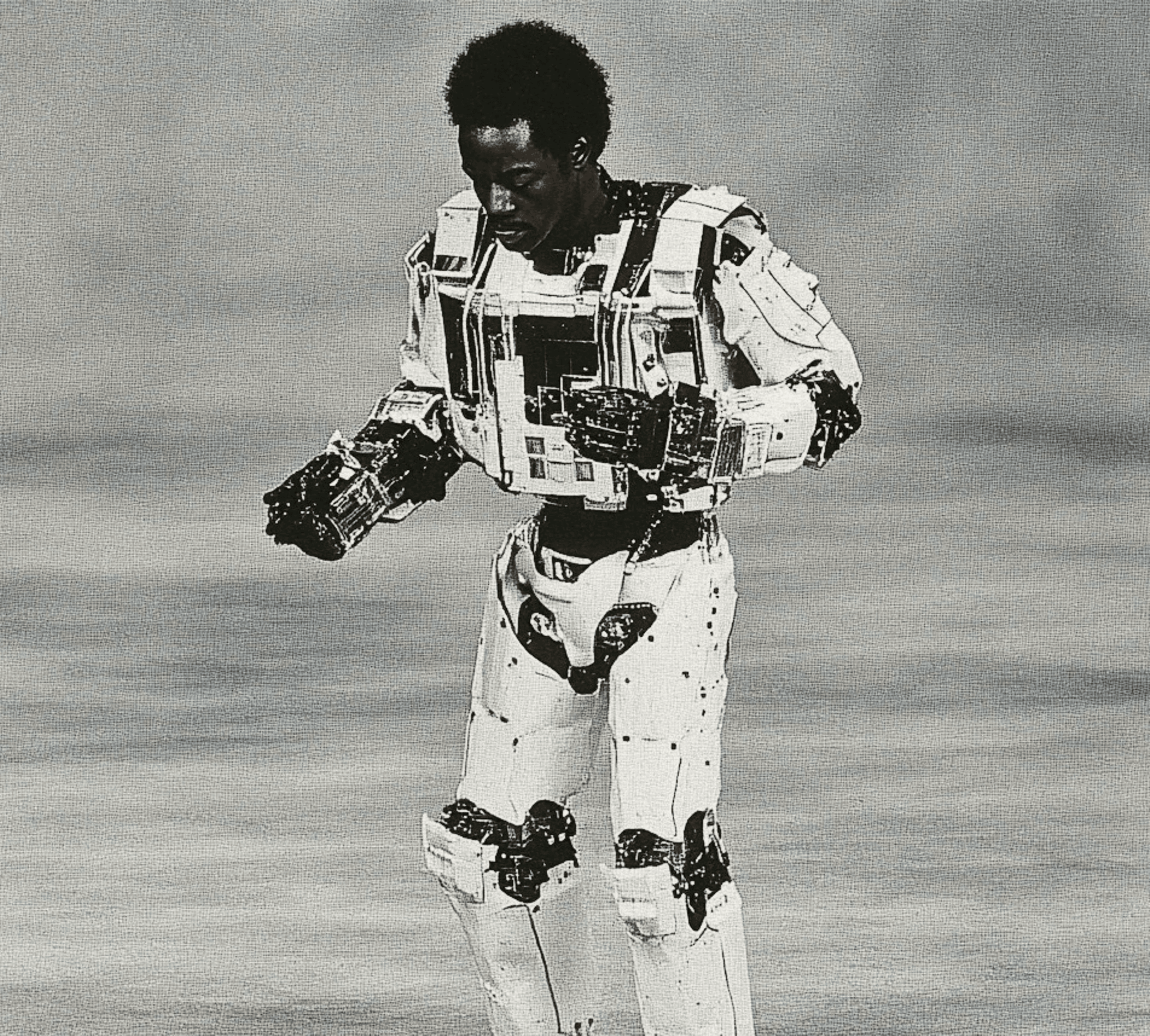
This mimicry extends beyond mere simulation, as AI systems act as exoskeletons for our minds and identities.
Our thoughts, movements, and biometric data feed these systems, which in turn influence our behaviors and decision-making processes, pioneering a new relation between human and machine.
Within this nuanced tapestry of our existence – our social constructs, cultural identities, and the ineffable aspects of our being – is compressed into rigid data structures and mathematical models.
The complexities of the racial experience, our understanding of emotion, the intricacy of gender – all are reduced to data points, processed by algorithms that seek patterns over nuance.
For marginalized communities especially, this digital exoskeleton can become both armor and cage.
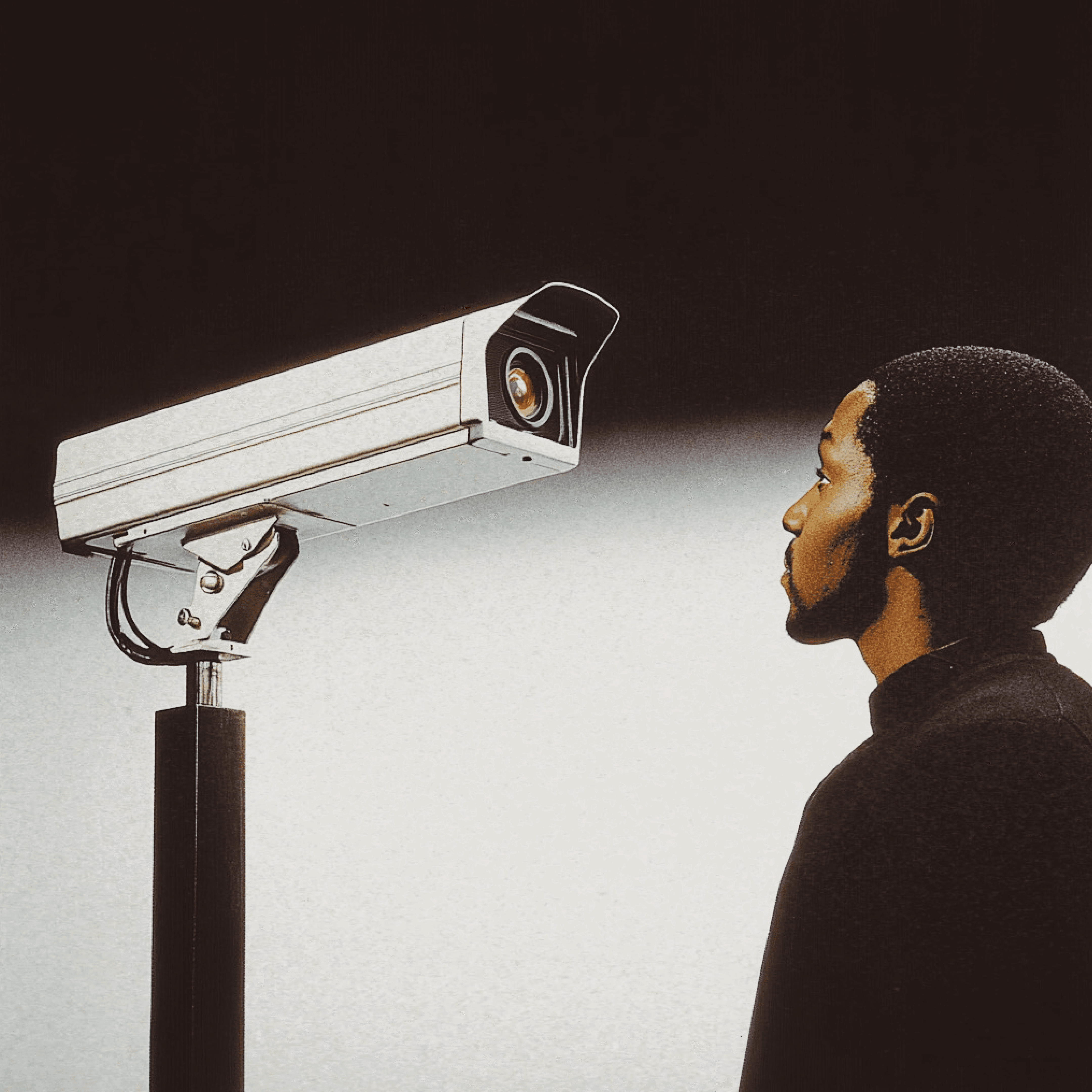
The shortcomings of facial recognition systems in accurately identifying Black faces exemplify this. While these shortcomings can perpetuate systemic biases and disproportionate impacts, they also inadvertently offer a form of protection from surveillance.
This paradox highlights the complex interplay between technology, power, and the body.
Within this dance between humanity and its technological creations lies an opportunity for a third chapter: agency.
We must be as obsessed with technology as it is with us, ensuring it serves as a tool for liberation rather than confinement.
This necessitates critical engagement with technology, demanding transparency, reframing ownership, and centering diverse human experiences in its design and deployment.
Only then can we navigate this new era, not as passive subjects of a computational substrate, but as empowered architects of a future where technology extends and enriches the human experience in all its complexity.
Calvary Rogers, Founder
Share Article